
Consultancy for the assessment of the potential for and development of management plan for artisanal longline fishing for offshore pelagics
he Jamaica government’s strategy is to develop pelagic fisheries by increasing fishing capacity and technology to the extent required to sustainably harvest the resource in a manner which is both economically efficient and socially equitable. The government, through financing from the World Bank under the project ‘Promoting Community Based Climate Resilience in the Fisheries Sector’, commissioned a study to prepare a development and management plan for artisanal longline fishing for offshore pelagics. A Fisheries Management Plan (FMP) was therefore developed to help the Government of Jamaica achieve sustainable development and management of under-utilised fisheries resources, taking into consideration the wider ecosystem impacts of a fishery including the main bycatch species and the associated baitfish fishery.
In order to achieve the overarching goal of the management plan ‘to ensure biological, ecological and socio-economic sustainable development of the large pelagic fisheries sector in Jamaica’, four purposes were defined. These include:
· Purpose 1: Sustainable exploitation of offshore pelagic species;
· Purpose 2: Protection of the environment and ecosystem;
· Purpose 3: Effective governance and management; and
· Purpose 4: Sustainable development of the fishery and markets.
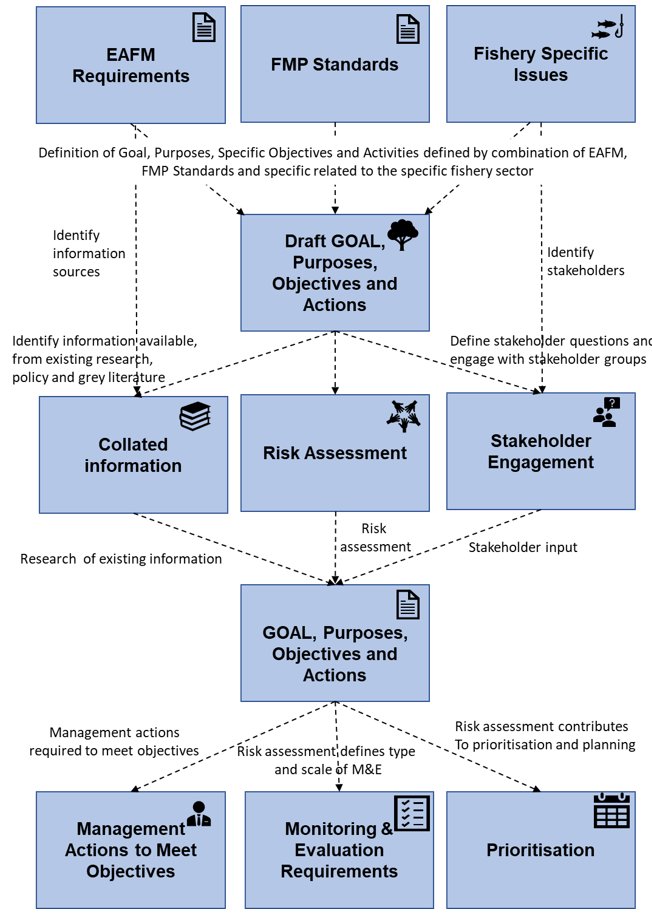
For each Purpose, a risk assessment was undertaken in the form of a SWOT (Strength, Weakness, Opportunity and Threat) analysis that was informed through literature review and stakeholder consultation. This assessment aimed to understand the current issues and barriers to developing a sustainable pelagic fishery in Jamaica. Following the SWOT analysis, a number of specific objectives and associated activities were defined that should be addressed in order to achieve the overall goal of the FMP. In order to provide further guidance, the key priority actions were highlighted which include: regional collaboration through a site visit to Eastern Caribbean States to learn best practice and facilitate knowledge sharing; exploratory fishing of offshore pelagic species with good stock status; field study to determine the current conditions and facilities at landings sites that are capable of receiving pelagic catches; a data collection programme targeting all offshore pelagics that are landed; and market strategies to promote the consumption of large offshore pelagics domestically targeting households, hotels and restaurants.
To ensure effective implementation of the FMP, a monitoring and evaluation plan and a communication plan were also developed. The monitoring and evaluation plan includes proposed key results (objectively verifiable indicators), means of verification and assumptions to ensure each activity is being achieved. An initial communication plan was developed which includes key stakeholders, messages and delivery pathways.
Name of Client
Ministry of Industry, Commerce, Agriculture and Fisheries (MICAF), Jamaica
Project Dates
-
Country
Jamaica