
Jamaica Community-based MCS
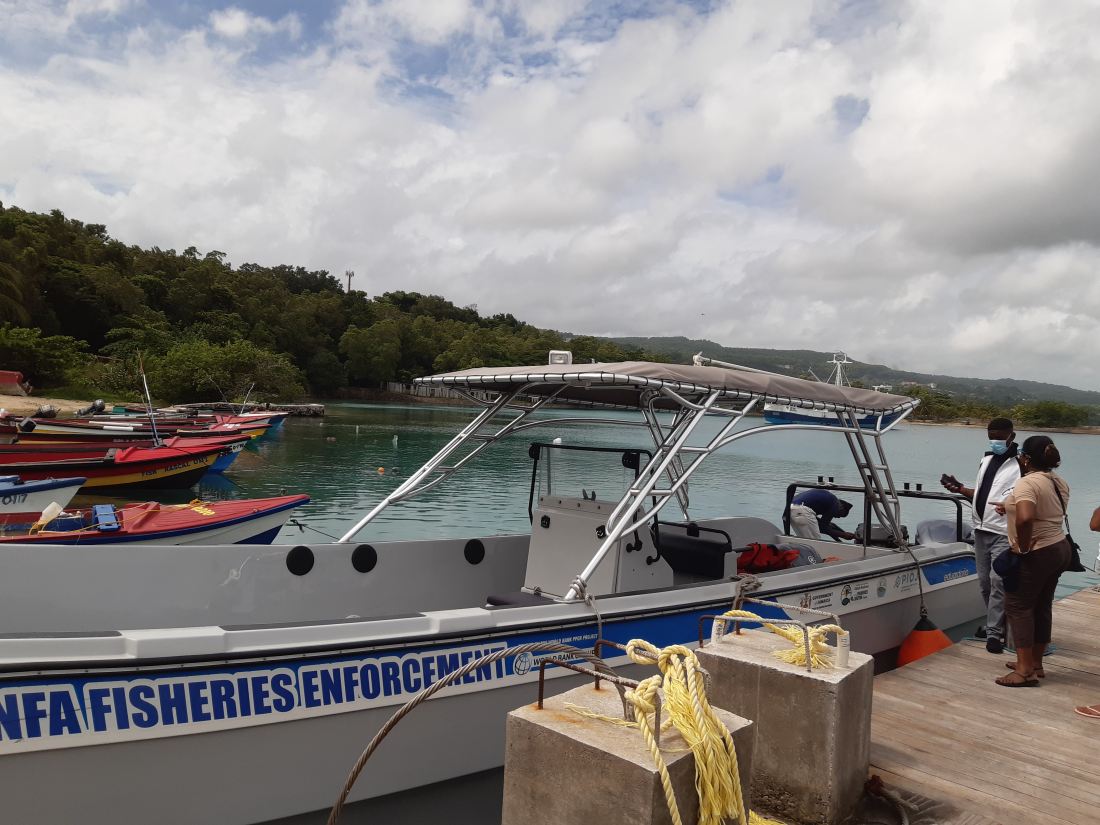
In an effort to improve its fisheries, conserve marine and coastal biodiversity, and build resilience to climate change, Jamaica established Special Fishery Conservation Areas (SFCAs) to protect near shore marine areas. SFCAs are no-fishing zones reserved for the reproduction of fish populations and maintenance of fish habitats. The objective of this project was to develop a Strategy and Action Plan to support community-led sustainable fisheries management comprised of monitoring, control and surveillance (MCS), in order to facilitate the building of climate resilience and adaptation of marine and coastal ecosystems. An action plan was therefore developed to deliver different strategic outcomes including proposed activities, the responsible institution, benchmarks/objectively verifiable indicators (OVIs), financial sources, financial needs and timeframe/milestones for the successful implementation of the Strategy and Action plan. Institutional arrangements for implementation were also provided including the key implementation partners, information sharing and coordination, and communication mechanisms.
The development of the Strategy and Action Plan including MCS and enforcement (MCS&E) involved three main activities: (i) A literature review of relevant national laws, policies and plans to identify legislation towards community-based organisations and Jamaica’s obligations relating to climate change; (ii) Capacity assessment to evaluate the institutional capacity of SFCA management teams to participate in an integrated fisheries management approach for the SFCAs that includes MCS&E, and (iii) Stakeholder consultations with relevant organizations including SFCA management teams, the National Fisheries Authority (NFA), National Environmental Protection Agency (NEPA), law enforcement agencies and other key stakeholders. To ensure effective implementation of the Strategy and Action Plan, a monitoring and evaluation framework was also developed. For each strategic goal, the monitoring and evaluation framework included target date for implementation, indicators, means of verification and frequency of monitoring and evaluation. The key priority areas to progress the community-based MCS&E Strategy and Action Plan were also provided.
These include the need to (
i) ensure there is enough financial support to cover community-based management activities,
(ii) enact policies towards user fees, spear fishing and buffer zone in SFCAs,
(iii) use of standardized templates, uniforms, buoys etc across the SFCAs,
(iv) increased collaboration with NFA and law enforcement agencies, and (
v) establish a framework for regular monitoring of the biophysical and socio-economic variables within the SFCA and in the surrounding areas.
Name of Client
Ministry of Industry, Commerce, Agriculture and Fisheries (MICAF), Jamaica
Project Dates
-
Country
Jamaica